
DISCOVER THE HAVELI OF TALES
DISCOVER THE HAVELI OF TALES
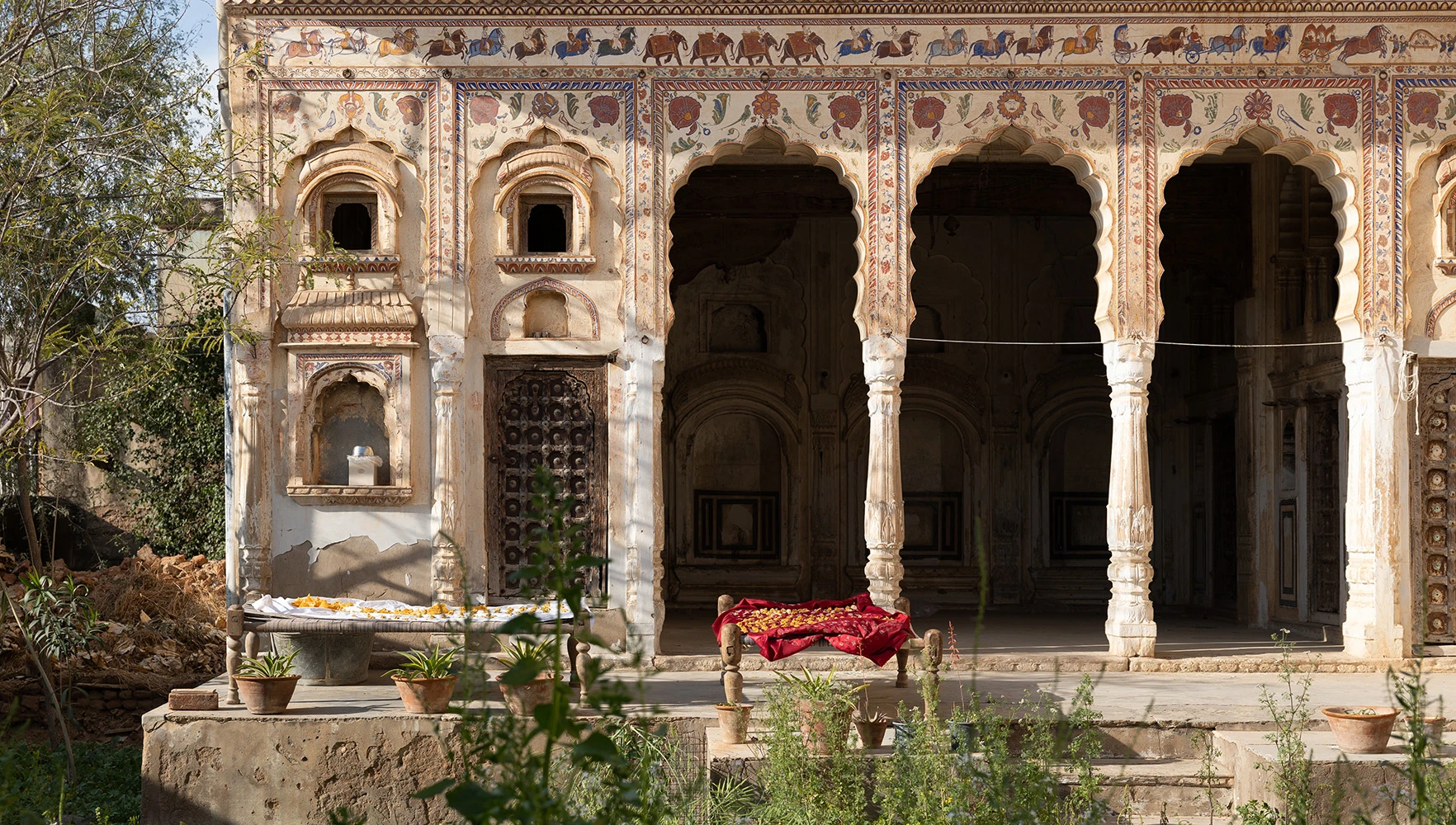
Essentially the beauty of Indian life is harmonising with our seasons. It’s about chasing the sun, the shade, the rains and the wind, in varying degrees according to the seasons, and making the most of it.
Mid march - mid May. We call Vasant the king of seasons. A time when new leaves and buds appear on the barren trees. The days begin to get longer and warmer, while the nights are still cool. A time for optimism and exuberance. It’s a time when the yellow and red flowers of palash and semal bloom in the forests. Winter crops are almost ripe in the fields and they need very little care now. The most exuberant festivals are celebrated in the daytime - Holi and Vasant Panchami fall in this season. Most celebrations go on for several days, with Holi being marked for a month. So now, before summer, food may still be enjoyed but cooler, quenching drinks start to appear. The favourite is the herbal concoction known as thandai.

Mid April till June. The longest and the brightest season, when the sun shines directly overhead for most of these long days. Native trees become enormous, the massive shades perfect for shelter. Life almost stops in the daytime and the short nights are meant for sleeping in the open under the stars. It’s the laziest time of the year, when people live a slower pace of life, spending a lot of time narrating tales - kathas (or religious story telling) like Bhagwat are common. While outside is generally quiet, inside the haveli is a hub of activity. The pols, chowks and jharokhas have a wide selection of spaces with shade and gentle breezes - perfect for lazing on charpoys or cool aangans, and playing indoor games like chopad. We relish the sweet mangoes and make pickles. Time to eat a little and drink a lot. Thirst quenchers like aam panna, chaachh, lassi, squash and sharbat are taken liberally, while kulfi is always the thing to look out for.

July - August. Varsha is the most dramatic of all the seasons of India. A time of varying intensities across the country. The arrival of dense clouds create moments of anticipation, humidity, respite, freshness and exhilaration. It’s time for the monsoon. It’s a time for little movement, particularly in the open. So time to contemplate, to self reflect, do yoga, meditation and Ayurvedic treatments. It’s the time known to have inspired the creation of the most renowned literary works, poetry and ragas. It’s the time associated with stories of romance, memories and separation. It’s believed that it’s time for all vegetation and animal life to grow and reproduce, and nothing should be done to stop them. All the festivals falling in this period happen to celebrate or thank nature simply, with no elaborate rituals. Some of the most beautiful festivals fall in this period like the Teej Swing Festival, Janmashthami, the 10 days long Ganeshotsav, The Snake worship festival of nag Panchmi and more.
Food wise, it’s time to be relaxed and avoid eating raw, leafy or fermented food. Simple, but cooked food is considered good as the digestive system is considered to be weak in this period.
In Rajasthan, this time is popular for picnics in holy spots with a natural setting and to relish the platters of Daal, Baati and Choorma.

September till mid October. In Sharad, we see the dampness in the air begin to dissipate, while the green foliage on trees stays fresh. It’s time to begin being in the open again, especially at night. These nights are crispy, cool and pleasant. The days continue to stay warm but the celebrations tend to happen in the evenings. It’s the time of a great cultural explosion when Indian cities and towns witness concerts, events and performances. Traditionally too its the time of Navratri, the period of a reboot of energy (Shakti). Our body systems need a changeover. It’s time to slowly adjust to the coming dry winter seasons. A period of fasting and abstinence happens in this nine day long festival. Slowly, richer foods will begin to be eaten to bring the required warmth to the body. The night of the full moon of Sharad Poornima is when Kheer is made to cool overnight as a blessed food. This period opens a huge range of food options to be made and relished.
Mid October to mid December. Hemant is the first of the two parts of India’s winter season. This can be called the early winter period. The nights get longer but the days are bright and pleasant, setting the mood for the biggest festival of the year known as Diwali. The trees begin to lose their leaves but flowers like marigolds abound. Farmers sell their produce grown in the monsoon in the markets and then travel to big seasonal fairs to shop and be entertained. An astonishing number of festivals and events are grouped into these days of Kartik and Paush months. Food wise, it’s time to relish sweets, nuts and all kinds of grains. It’s time for travel, parties and celebrations. The wedding season begins towards the end of this season. It’s time to sleep indoors but celebrate out in the open.

Mid December to mid February. Shishir is the coldest time of the year when one might need warming up even in the daytime. Days become very short, though the skies are clear and the sun shines bright. More time is spent inside the home and the best pastime is food. Ayurveda suggests that the digestive system is at its strongest in this season and we must adapt our foods to include warming ingredients. Thalis become elaborate. Gur, gond and ghee become important. This is the time when anything can be cooked and eaten, from leafy vegetables to multiple grains. It’s also the time when people chase the sun, enjoying sitting under its warmth. The most important of the few sun related festivals, Makar Sakranti, falls at this time. It’s also the time to enjoy kite flying from the roof tops - a favourite activity. Once again the unique architecture of the Haveli makes a positive impact. With courtyards, little cosy chambers, plentiful terraces and sunny corners, one always find the perfect spot to sit. The cold nights are so long that there is ample time to sit by the fire swapping endless stories, and still have time for sleep.

We In Mukunda, base our fresh organic cuisine on the principles of Ayurveda, which originated in India over 5,000 years ago. Ayurveda, the natural and holistic approach to medicine also considers food as medicine, with diet choices being the basis of good health and balance.
According to Ayurveda, everyone has a unique combination of life energies called Doshas. These three doshas, Vata, Pitta and Kapha are fundamental bio-energies that govern physiological and psychological functions of the body, with good health resulting when all three are in balance. This state of good health is known as Prakriti, or your body’s natural constitution from birth.
Even the food you eat is considered to have its own prakriti and should play a role in your culinary choices. External seasonal energies may also directly interact with your body and result in contradictory effects on your health. It is important therefore, according to Ayurvedic principles, to always balance these energies by paying attention to and making correct adjustments to your diet, activities and mental health. For example, curd is a great probiotic that improves digestion and can boost immunity. In Mukunda, we use this wonderful ingredient in much of the haveli’s cooking, depending on the season and timing of the day. Sometimes, simply adding a little cumin to a dish can help achieve a desired balance.
So in harmony with each new season, our kitchen menu becomes a lesson in Ayurvedic teachings.